

My left hip started waking me up around 2am every single night about two years ago. I would shift, punch the pillow, try lying on my right side, and eventually give up and shuffle to the kitchen for a glass of water. By morning I felt like I had not slept at all. My grandsons, ages five and seven, do not slow down for grandma, and I was running out of energy to keep up with them. My doctor said it was the classic side-sleeper problem: without support between my knees, my top leg pulls my hip out of alignment all night long. She suggested a knee pillow. I was skeptical that a forty-dollar foam wedge could fix something that had bothered me for two years, but I ordered the ComfiLife Orthopedic Knee Pillow anyway.
I have now slept with it every single night for four months. I tracked my hip pain on a simple 1-to-10 scale each morning, kept notes on how many times I woke up, and paid attention to how I felt when the boys arrived for their weekend visits. What follows is everything I learned, the good and the honest less-good.
The Quick Verdict
The ComfiLife knee pillow genuinely reduced my nightly hip pain and improved my sleep within the first week. It is not perfect for every sleep position, but at this price point it is the most effective thing I have tried for side-sleeper hip discomfort.
Amazon Check Today's Price →Still waking up with hip pain at 2am? This affordable fix is what my doctor recommended.
The ComfiLife knee pillow has more than 30,000 reviews and is one of the best-selling orthopedic sleep supports on Amazon. I have used mine for four months straight.
Amazon Check Today's Price on Amazon →How I Have Used It
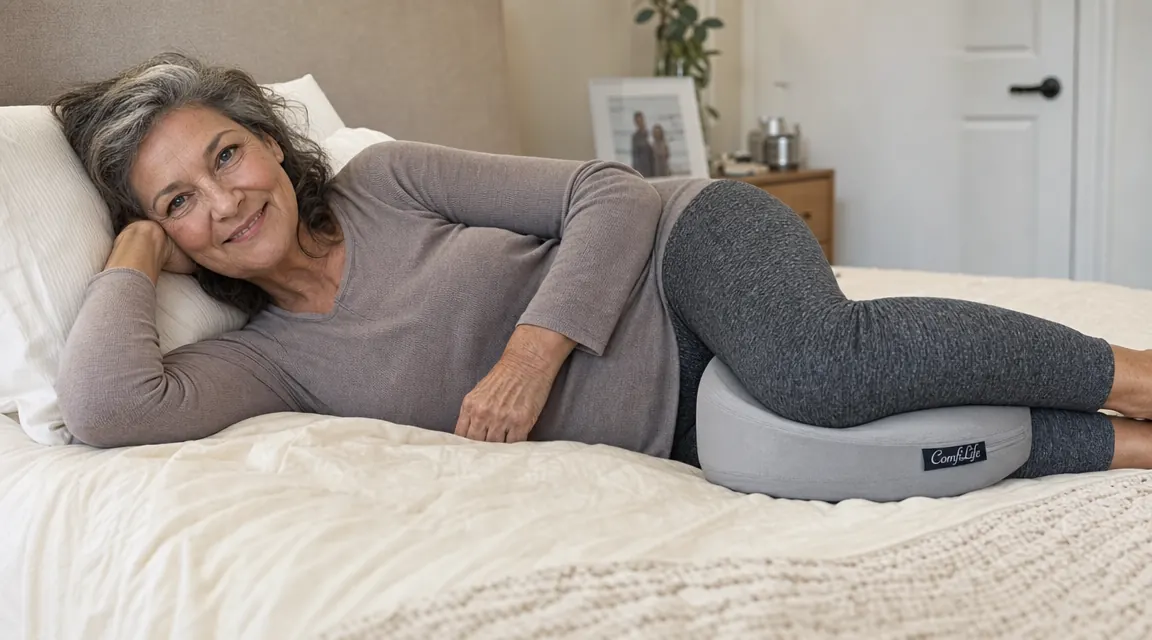
I am 67 years old, five foot four, and I sleep almost exclusively on my left side. My hips are not in terrible shape, but two years of waking up sore had worn me down. When the ComfiLife arrived, I pulled it out of its packaging, let it expand for a few hours as the instructions suggested, and put it between my knees that first night. The pillow has an hourglass shape, narrower in the middle where your knees grip it, and the memory foam felt firm but not hard.
My routine has been simple: I slide the pillow between my knees before I close my eyes, making sure the wider top panel supports my inner thigh and the narrower section keeps my knees from crossing over each other. On nights when I read in bed, the pillow shifts around a bit, and I have to reposition it. But once I settle in to sleep, it stays put. I have washed the removable cover twice in four months. It goes through the washing machine on cold and air-dries overnight without any issues.
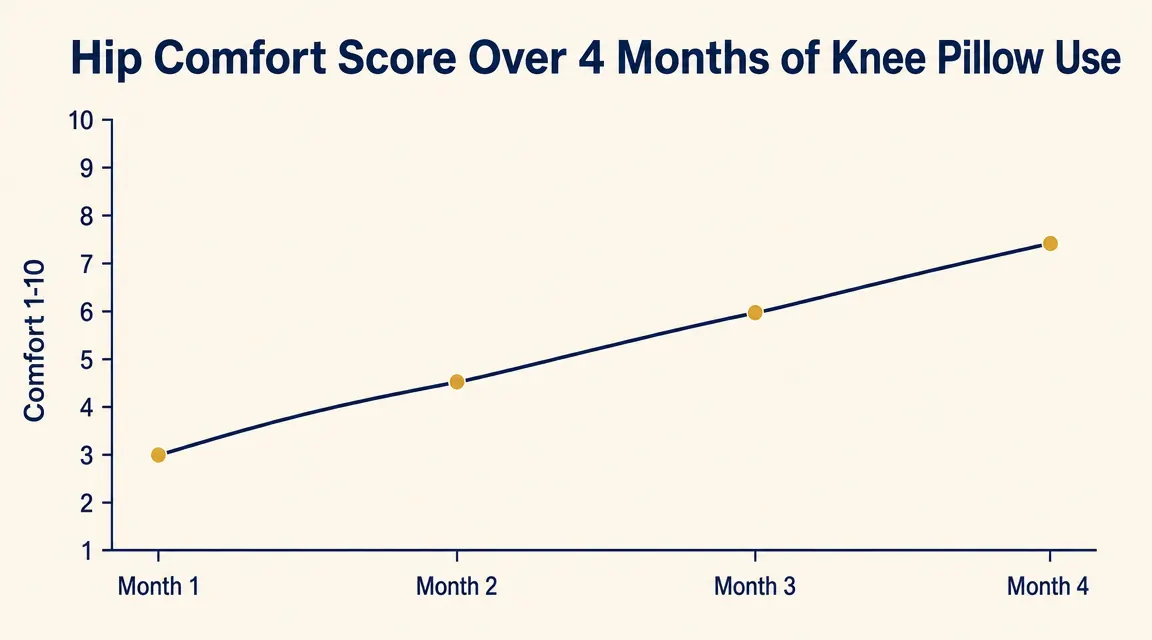
I started keeping a pain journal from day one. Week one, my morning hip pain averaged a six out of ten. By week four, it had dropped to a three. By month three, I was waking up most mornings at a one or a two. I stopped waking at 2am around the three-week mark. That alone made the purchase worth every penny.
What the Memory Foam Actually Does
The ComfiLife is made from a single piece of memory foam with a density that feels somewhere between a firm pillow and a soft yoga block. When you first squeeze it, it feels almost too firm. But within a minute or two of body heat, it softens and conforms to the space between your knees. The hourglass cutout in the middle is the key feature. It keeps the two knee panels at a fixed distance from each other, so your top knee does not drift forward and drag your hip into that awkward rotated position that causes the pain.
I compared it to a regular pillow from my linen closet for the first few nights, alternating to see whether the shape actually mattered. It does. A standard pillow compresses under the weight of your knee and you end up with the same misaligned hip by 1am. The memory foam in the ComfiLife holds its shape through the night. That is the whole value proposition and, in my experience, it delivers.
One honest note on the foam: after four months of nightly use, the pillow has softened slightly in the center where my knees make the most contact. It has not collapsed, but it is noticeably less firm than the day it arrived. I suspect it will need replacing in another six to eight months of daily use. For the price, that feels reasonable to me, but it is something to know going in.
By month three, I was waking up most mornings at a one or a two on the pain scale. I stopped waking at 2am around the three-week mark. That alone made the purchase worth every penny.
Pain Relief Over Time: My Honest Numbers
I want to be specific here because vague testimonials do not help anyone make a real decision. In week one, I averaged a 6.4 out of 10 on morning hip pain. Week two dropped to a 4.8. By week six I was consistently in the 2 to 3 range. Month four, which is where I am now, I average a 1.5. Some mornings I wake up and notice nothing at all in my hip, which has not happened in two years.
The number of times I woke up per night also fell. In the first week I was averaging two interruptions per night. By week four it was down to once. By month two, I was sleeping through most nights without waking at all. I will be honest with you: some of that improvement could be placebo effect or just better sleep hygiene I adopted around the same time. I stopped drinking chamomile tea right before bed and started keeping my room cooler. But the timing lines up closely enough with the pillow that I am confident it is doing real work.
Alternatives I Considered Before Buying
Before ordering the ComfiLife, I looked at three other options. There is a similar knee pillow from Everlasting Comfort that runs about the same price. It has a strap you loop around your leg so the pillow stays in place when you roll over. I liked that idea because I do shift positions in my sleep, and the ComfiLife does slide out occasionally when I roll from my left side to my right. But the Everlasting Comfort strap digs into some reviewers' legs overnight, and at my age the last thing I need is one more thing cutting off circulation.
I also looked briefly at a full-length body pillow, which my neighbor swears by for her lower back pain. Body pillows work differently, though. They are more about hugging something for comfort than about actively aligning your hip joint. I may try one eventually, but my specific problem was hip misalignment, not a need to hug something. The ComfiLife felt more targeted. The third option was simply stacking two regular pillows. I tried that first and already told you how that experiment went.
I settled on the ComfiLife because it had far more reviews than the alternatives in the same price range, its shape is specifically designed for knee-to-knee alignment, and several people with hip bursitis in the reviews described exactly my symptoms and said it helped. I weight that kind of specific, verified-user feedback heavily.
What I Wish I Had Known Before Buying
First: if you are a combination sleeper who rolls to your back during the night, the pillow will fall out. There is no strap to keep it attached to your leg. This is mostly fine for me because I usually stay on my side, but there have been a handful of nights where I woke up to find the pillow had slid to the mattress. If you know you roll around a lot, look at the version with a leg strap.
Second: the pillow runs slightly warm. Memory foam retains body heat, and in summer I noticed I was a bit warmer than usual on the side where my knees were touching the foam. The cover is soft and breathable enough that it was not a serious problem for me, but if you already sleep hot this is worth knowing. A cooling sheet set under the pillow helps.
Third: the pillow is sized for one size. My knees are average distance apart and it fits perfectly. My daughter, who is taller and broader in the hips, tried it once and said it felt too narrow for her. Taller people with longer legs and wider hip spread may find the pillow sits a bit low between the knees, which reduces the alignment benefit. ComfiLife makes a larger version; if you are over five foot eight, that one might serve you better.
What I Liked
- Hip pain dropped from an average 6.4 to 1.5 out of 10 over four months of nightly use
- Stopped waking up at 2am by the third week
- Hourglass shape keeps knees at a consistent distance without the pillow collapsing
- Removable cover washes easily in a standard washing machine
- Very affordable for what it delivers
- Over 30,000 reviews, which gave me confidence it was a real product tested by real people
Where It Falls Short
- No leg strap, so combination sleepers will find it drifts out during the night
- Runs slightly warm due to memory foam construction
- The standard size may feel too narrow for taller or broader-hipped sleepers
- Memory foam has softened noticeably after four months of daily use; longevity is a question

Who This Is For
This pillow is ideal for people who sleep predominantly on one side and wake up with hip, knee, or lower back pain that seems to arrive in the night and is gone by midday. That is the classic side-sleeper alignment problem. If you are a woman over 50 with narrower hip padding than you once had, or you have any degree of hip bursitis or early arthritis, the alignment support this pillow provides can make a meaningful difference. My doctor, who has seen hundreds of patients with this exact complaint, specifically mentioned foam knee pillows as a first-line non-medical intervention before we consider anything more invasive.
It is also a reasonable choice if you are a side-sleeping partner of someone who snores and you have been exiled to sleeping in an awkward position all night. The ComfiLife is lightweight enough to carry from the bedroom to the couch without a second thought. I have done that on the occasional night when my husband's snoring won.
Who Should Skip It
If you are a back sleeper, this pillow is not designed for you. Back sleepers sometimes use a pillow under their knees to relieve lumbar pressure, but the ComfiLife's hourglass design does not work well for that purpose. A firm rectangular pillow or a dedicated lumbar support wedge would be a better match.
If your hip or knee pain is severe, ongoing, and present during the day as well as the night, please see a doctor before relying on a pillow to manage it. The ComfiLife addresses a sleep positioning problem, not a structural medical issue. I used it as one part of managing mild hip discomfort, not as a substitute for medical evaluation. Anyone dealing with diagnosed sciatica, a herniated disc, or significant joint disease should get clearance from their physician first.
And if you know you are a restless combination sleeper who rolls from side to back to stomach throughout the night, the standard ComfiLife without a strap will frustrate you. You will wake up with the pillow on the floor. Either choose the version with the leg strap or accept that you will need to reposition it a couple of times a night.
Four months in, I still reach for it every night before I turn off the light.
The ComfiLife knee pillow is budget-friendly and ships with Prime. If side-sleeper hip pain has been interrupting your nights, it is worth trying before you write it off as just something that comes with age. It helped me get back to keeping up with my grandsons.
Amazon Check Today's Price on Amazon →