
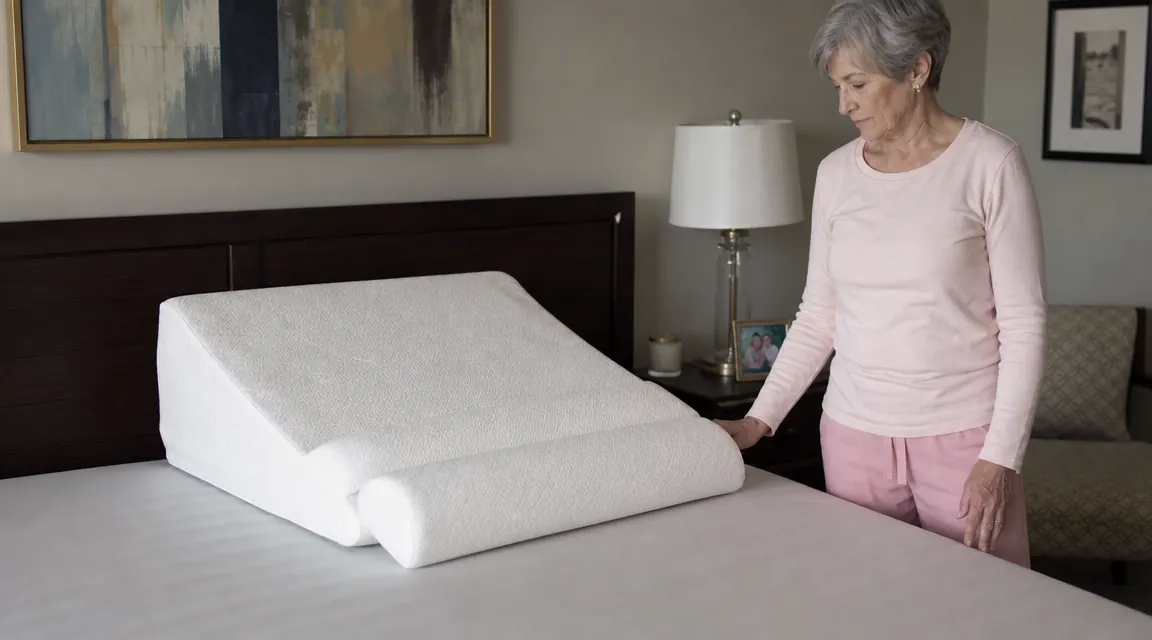
My doctor told me to elevate my head for acid reflux about two years before I actually did anything about it. I tried stacking two pillows. They slid apart by midnight, I woke up flat, and the heartburn came right back. Then my son mentioned bed wedge pillows and I was skeptical, honestly, but I ordered the Yojoker 4-piece set and figured I would give it a real shot. The difference was noticeable within three nights. But I also made a few mistakes in the first week that cost me some sleep, and I want to save you from those.
The short version is that a wedge pillow works by using gravity to keep stomach acid where it belongs. When your upper body is elevated at the right angle, acid cannot crawl up your esophagus while you sleep. But the angle has to be right, your body position has to work with it, and the pillow beneath your head needs to sit correctly on the slope, not off to the side or bunched up. Get those three things right and most people see real improvement within a week.
Still waking up with heartburn? The right wedge setup takes about two minutes to get right.
The Yojoker 4-piece orthopedic wedge pillow set has a 4.4-star rating from nearly 2,000 verified buyers. Removable, washable covers. Ships with the leg support, back support, and reading wedge pieces included.
Amazon Check Today's Price on Amazon →Step 1: Place the Wedge at the Head of the Bed, Not Under Your Pillow
The most common mistake I see mentioned in reviews, and the one I made myself, is sliding a regular pillow on top of the wedge but then also keeping a second pillow underneath your head. That creates a peak shape. Your neck cranes forward, you wake up stiff, and you conclude that wedge pillows are uncomfortable. They are not uncomfortable when set up correctly.
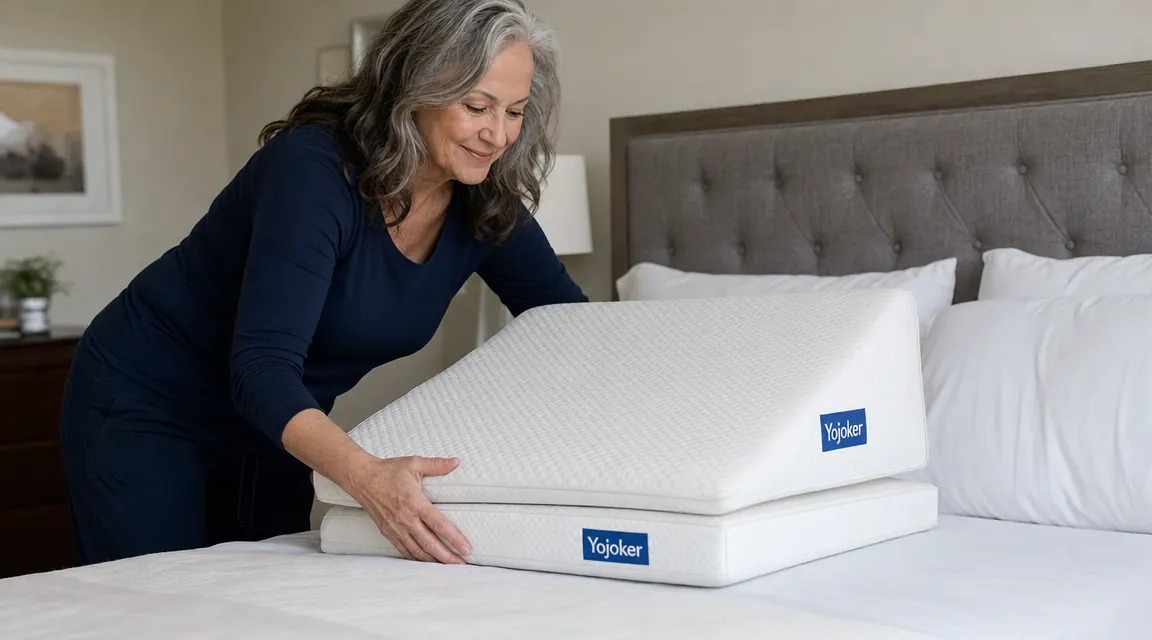
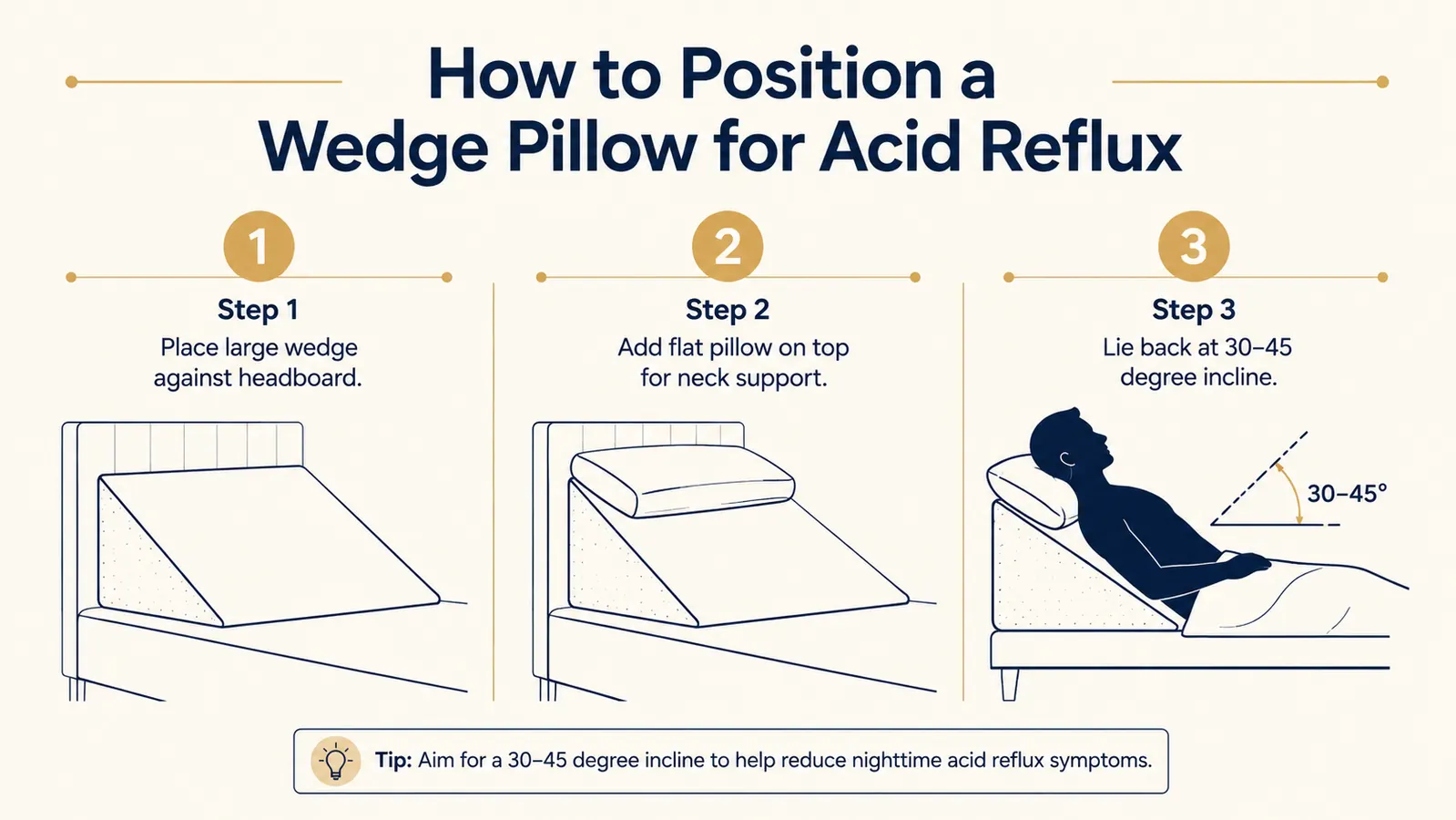
Place the Yojoker wedge flat against the head of your mattress with the high end touching the headboard. The slope should run from tall at the top down to mattress level at the foot. Then put your regular sleeping pillow on top of the wedge, toward the upper half of the slope. That is your only pillow. Your head, neck, and upper back are all on the wedge system. Your lower back and hips are flat on the mattress as usual.
With the Yojoker set, the main wedge piece handles this beautifully because the foam is dense enough to hold its shape all night. I have had lighter foam wedge pillows that compressed by 2am and I was basically back to flat. That has not been a problem with this one after several months of nightly use.
Step 2: Aim for a 30 to 45 Degree Elevation Angle
Gastroenterologists typically recommend elevating the head of the bed by six to eight inches for nighttime reflux. That translates roughly to a 30 to 45 degree incline on a standard-height mattress. The Yojoker main wedge hits that range, which is why it works for reflux specifically and not just for reading in bed.
If the angle feels too steep at first, that is normal. Your body needs three to five nights to adjust. I slept at a slightly shallower angle the first two nights by positioning myself a little lower on the wedge, then moved fully onto the high end by night four. Do not force yourself to lie at full elevation if it is keeping you awake. A gradual approach is fine and still provides reflux benefit.
One thing worth knowing: the elevation needs to be under your torso, not just your head. Elevating only your head can actually worsen reflux by bending your body at the stomach. The Yojoker wedge is long enough that your shoulders and upper back are fully supported on the slope, which is exactly what you need.
Step 3: Sleep on Your Left Side When Possible
This one surprised me when my doctor mentioned it. The anatomy of your digestive system means that sleeping on your left side, even at a slight elevation, reduces reflux more effectively than lying flat on your back does. The stomach sits to the left of center, and when you lie on your left side, the junction between your esophagus and stomach stays above the level of stomach acid.
On your back at an elevated angle is also fine for reflux relief, and many people sleep this way naturally with a wedge pillow. What you really want to avoid is your right side, which positions the junction lower and makes it easier for acid to escape. If you are a right-side sleeper by habit, it takes a few weeks to retrain yourself, but the wedge actually helps with this by making your left side feel more naturally supported.
With the Yojoker four-piece set, I use the leg wedge under my knees when I am on my back. It takes the pressure off my lower back and makes the whole sleeping angle feel more natural. Without that leg support, I kept sliding down the main wedge through the night, which defeats the purpose. If your set includes a leg piece, use it.
After three nights on the wedge I stopped keeping antacids on the nightstand. I have not needed them since. That alone tells you something.

Step 4: Stop Eating at Least Three Hours Before Bed
A wedge pillow is a mechanical solution, and it works well. But it works even better when you are not loading your stomach right before lying down. I know this is not the most exciting advice, and I am not going to lecture anyone about what to eat. But timing matters a great deal.
When I first started using the wedge, I was still eating a small snack around 9pm and going to bed by 10:30. I still had some reflux symptoms those first few nights. Once I pushed my last meal to 7pm and gave myself a full three hours before bed, the improvement was much more dramatic. The wedge handles the positioning. Your eating timing handles the volume of acid in your stomach. Together they make a real difference.
A few other triggers worth knowing about: spicy foods, tomato-based sauces, citrus, coffee, and alcohol all increase acid production. I am not suggesting you give up your morning coffee, but if your reflux is bad, a temporary experiment of cutting one or two of these for a week while you get used to the wedge setup will tell you a lot about what is driving your nighttime symptoms.

Step 5: Give It a Full Week Before Judging the Results
Night one on a wedge pillow is almost never your best night. Your body is not used to the angle, your neck may feel slightly different in the morning, and you will probably shift around more than usual. This is completely normal. Most people who quit after two nights would have had significant relief by night seven if they had stuck with it.
By night three or four, most people report that they are sleeping through the night without waking from heartburn. By night seven, the sleeping position typically starts to feel natural. I kept a simple note on my phone those first two weeks, just a one-line entry each morning: did I wake up with heartburn, yes or no. By day eight I had five consecutive no-heartburn nights, which was the first time that had happened in over a year.
If after two full weeks you are still waking with reflux at the same frequency as before, check these things first: are you starting the night on the wedge but sliding off it by morning? Is your head pillow bunched to the side of the slope? Is your eating timing still close to bedtime? Usually the issue is one of those three, not the wedge itself.
What Else Helps Alongside the Wedge
The Yojoker wedge pillow handles the mechanical side of nighttime reflux really well. Gravity does the work once you are in position. But a few other simple habits make the system more effective and may help you get relief faster in the first week.
Loose-fitting pajamas matter more than you might expect. Tight waistbands and compression around your midsection increase abdominal pressure, which pushes acid upward. I switched to looser sleep clothes about the same time I started the wedge and I honestly cannot tell you which change helped more in the first few days. Elevating the head of your actual bed frame with risers is another option some people use, but the wedge pillow is portable, adjustable, and does not require any tools or furniture rearrangement, which is why most people prefer it.
If you have persistent, severe reflux that is not improving after four to six weeks of consistent wedge use and dietary timing adjustments, that is a conversation worth having with your doctor. For most people with typical nighttime heartburn or mild GERD, a properly set-up wedge pillow is a real, lasting solution rather than a temporary patch. I have been using mine for months now and I sleep better than I have in years. My grandsons wear me out during the day, and the last thing I want is to be awake at 2am on top of it.
If you want my full three-month breakdown of how this particular wedge performed, including what I noticed about the foam quality, the cover fabric, and a few things I wish the product did differently, I wrote that up separately in my detailed wedge pillow review for acid reflux sleep. And if you are trying to understand why a physical pillow works better than another antacid tablet for nighttime symptoms, the explanation is worth reading in my piece on 10 reasons a wedge pillow beats antacids at night.
Ready to try the setup? The Yojoker 4-piece wedge pillow is the one I use every night.
4.4 stars, nearly 2,000 Amazon reviews. Comes with the main wedge, leg support, back bolster, and reading wedge. Removable covers that actually go in the washing machine. If you follow the steps above, most people notice a difference within the first week.
Amazon Check Today's Price on Amazon →