

For most of my adult life I thought waking up groggy was just how mornings worked. My phone alarm would go off at 6:30, I'd hit snooze twice, drag myself out of bed, and spend the first hour of my day feeling like I was moving through fog. When my grandsons started staying over on weekends, that fog became a real problem. A groggy grandmother cannot keep up with two boys under seven who are ready to go the moment their eyes open.
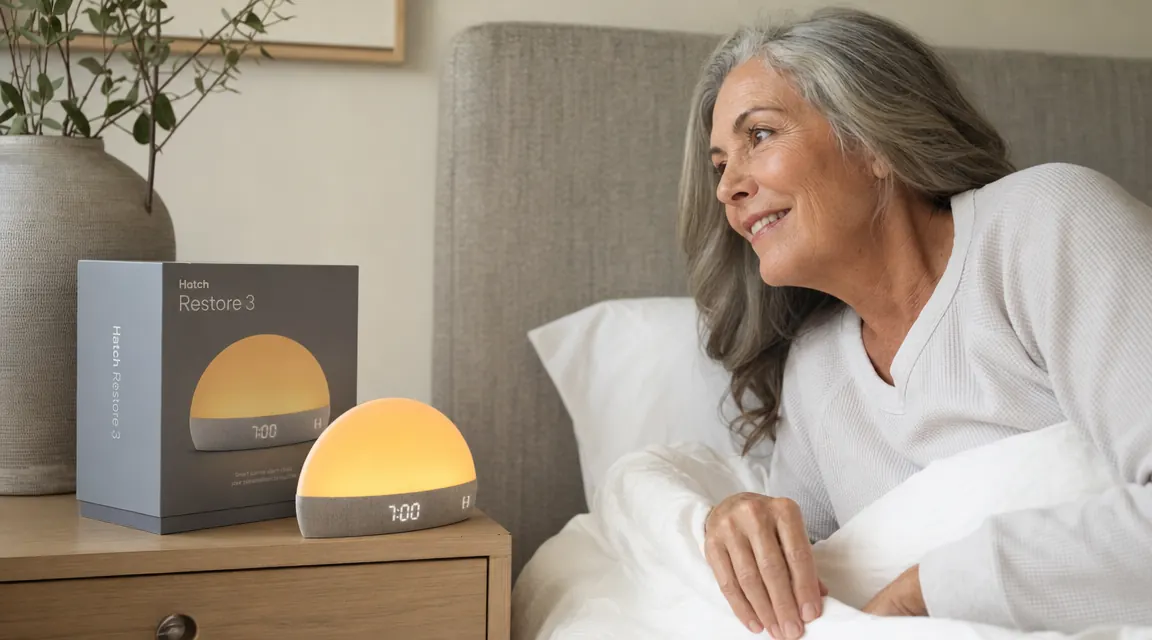
It turns out there is a name for that foggy feeling: sleep inertia. It is what happens when your brain is yanked from deep or middle-cycle sleep by a jarring noise and forced to be alert before it is ready. The good news is it has a solution, and it does not involve willpower or extra coffee. It involves changing how you wake up, not just when. The Hatch Restore 3 Sunrise Alarm Clock is the tool I used to fix this, and the steps below are exactly what I did.
Stop dragging through your mornings. The Hatch Restore 3 wakes you with light before sound.
The Hatch Restore 3 simulates a natural sunrise starting 30 minutes before your alarm, so your body is already partway awake when the sound begins. Rated 4.3 stars with over 5,500 reviews on Amazon.
Amazon Check Today's Price on Amazon →What Is Sleep Inertia and Why Does It Make You Feel So Bad?
Sleep inertia is the period of reduced alertness, impaired judgment, and that cotton-headed feeling that lasts anywhere from a few minutes to an hour after you wake up abruptly. It happens because your brain does not switch instantly from sleep to full wakefulness. There is a transition period, and if your alarm interrupts a deep-sleep stage, that transition is rough.
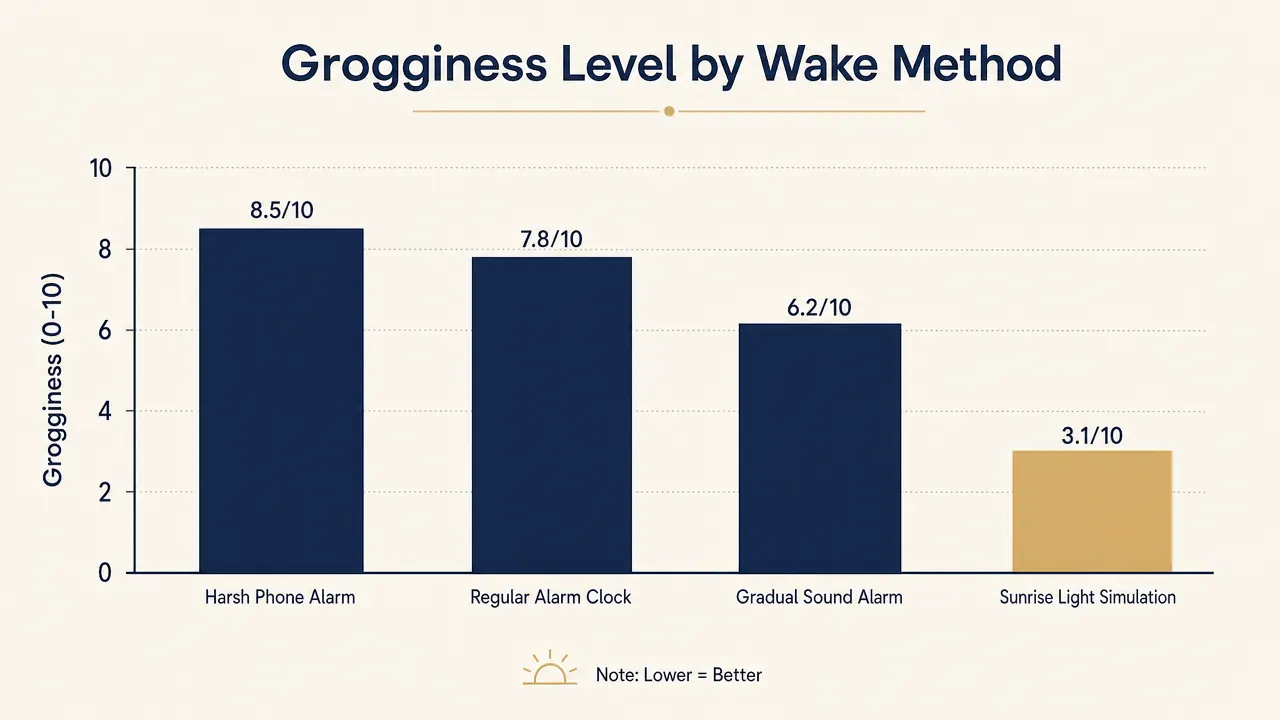
The problem is worse as we get older. Our sleep cycles shift, we spend more time in lighter stages, and our internal clock becomes more sensitive to disruption. A phone alarm at full volume does not care what stage of sleep you are in. It just fires. A sunrise alarm clock works differently. It starts with light, which nudges melatonin production down and cortisol up in a slow, natural arc, so by the time the sound begins, your brain is already in a lighter stage and partway out of sleep on its own.
Step 1: Set Your Sunrise Window to 20 to 30 Minutes Before Your Wake Time
Open the Hatch app on your phone and navigate to Routines. When you set your wake-up alarm, you will see an option to set a sunrise duration. I started with 20 minutes and eventually moved to 30. The light begins at a barely visible amber and climbs gradually to a warm daylight yellow. By the time my chime goes off, I am usually already lying awake watching it.
The key is giving the light enough lead time to actually do its job. Ten minutes is not enough for most people. If you find yourself still startled when the sound kicks in, extend the sunrise window by five minutes at a time until you are waking up on your own a few minutes before the chime. That is the goal.
One practical note: the Hatch Restore 3 must be within arm's reach and angled toward your face to be effective. I put mine on my nightstand about two feet from my pillow, facing me. If it is across the room or pointed at the ceiling, the sunrise effect is much weaker.
Step 2: Choose a Gentle Sound, Not a Jarring Alarm
The Hatch Restore 3 comes loaded with a library of wake sounds: soft chimes, birdsong, gentle ocean waves, a simple meditation bell. In the app, under your routine settings, you pick your wake sound and set its starting volume and how quickly it rises. I use the Sunrise Chime at a starting volume of 15 out of 100, rising slowly over two minutes.
Avoid anything with a sudden onset or a repetitive beep. Those sounds spike cortisol in a way that leaves you jangled rather than alert. The whole point of the sunrise method is a gradual ramp, and that applies to sound as much as light. A gentle chime that starts quiet and grows gives your nervous system time to respond rather than react.
If you share a room with a partner who wakes at a different time, the low starting volume is a real advantage. My husband sleeps an hour later than I do, and the low-light, low-sound combination rarely disturbs him.
Step 3: Use the Bedtime Routine Feature the Night Before
Waking up well starts the night before. The Hatch Restore 3 lets you set a bedtime routine in the same app: a dim, warm light that begins 30 to 60 minutes before your target sleep time, paired with a wind-down sound like rain or white noise. I set mine to start at 9:30pm, shifting the light to a deep red-amber at low brightness. That signals to my body that it is time to wind down.
The reason this matters for morning grogginess is simple: the deeper and more complete your sleep is, the lighter your sleep stage tends to be in the early morning hours just before your natural wake time. A proper wind-down routine gets you into deep sleep earlier, which means you are more likely to be in a light sleep stage by 6:30am. The sunrise light then catches you at the right moment rather than dragging you out of the wrong one.
The first morning I woke up before the chime went off, I just lay there watching the light get brighter and thought, this is what mornings are supposed to feel like.

Step 4: Keep Your Bedroom Cool and Dark Until the Sunrise Begins
A sunrise alarm only works if the room is otherwise dark when the light begins. If streetlights or an early sunrise are already flooding your room by 5am, the Hatch Restore 3's gradual glow gets lost in the ambient light and loses its signaling power. I use blackout curtains on my bedroom windows, which also help me fall asleep faster by removing the visual cue that it is still light outside.
Room temperature is the other variable. Research on sleep quality consistently points to a cool room, roughly 65 to 68 degrees, as the sweet spot for deep sleep. When your body temperature drops slightly during sleep and then begins to rise in the morning, that temperature shift is itself a natural wake signal. A room that is too warm flattens that curve and makes it harder to move from sleep to wakefulness. I keep a small fan on my side of the room, which also adds a soft background noise.
Step 5: Do Not Hit Snooze. Get Up When the Light Is Full.
This is the hardest step for most people, and it was the hardest for me too. When the sunrise is full and the chime begins, the temptation is still to close your eyes and let it run again. But hitting snooze after a light-based wake is more disruptive than not hitting it, because you are now interrupting a lighter stage of sleep with another abrupt sound. That second alarm tends to leave you worse off than the first.
The trick I use is to sit up the moment the chime sounds, before I have time to talk myself out of it. Sitting up changes your blood pressure and starts moving oxygen. Within 90 seconds I am usually awake enough to swing my legs over the side and stand. If I am still sitting up I have won half the battle already.
The Hatch app has a feature called Snooze Limit that lets you cap snoozes at one or set it to none. I set mine to one for the first two weeks while I was adjusting, then moved to none. Having that hard stop removes the negotiation entirely, which is helpful when you are still half asleep and bad at decision-making.
What Else Helps Reduce Morning Grogginess
The sunrise method handles the waking-up side of the equation. A few other habits work alongside it. Drinking a glass of water within five minutes of getting up helps because you are mildly dehydrated after eight hours of breathing. Dehydration amplifies the fog. I keep a glass on my nightstand now, right next to the Hatch Restore 3.
Getting outside or near a bright window within 30 minutes of waking up reinforces the morning light signal that your brain needs to fully reset its internal clock. Even five minutes on the back porch with my coffee makes a difference. On days when I stay inside and the curtains are still half closed, the fog tends to linger longer even with the sunrise alarm doing its job.
If you want to read more about why the sunrise method works better than a standard alarm and what else you can do to protect your sleep quality, my review of the Hatch Restore 3 after five months of daily use goes into much more detail: see the full review at hatch-restore-3-review-long-term. And if you are curious whether a sunrise alarm clock is the right swap from your phone alarm, this piece covers ten specific reasons to make the change: 10-reasons-sunrise-alarm-clock-beats-phone-alarm.
A Note on What the Hatch Restore 3 Cannot Do
It will not fix a sleep disorder, sleep apnea, or the kind of chronic fatigue that has a medical cause. If you are sleeping eight hours and still waking up exhausted every single morning regardless of how the alarm goes off, that is worth talking to a doctor about. The sunrise method works best when the grogginess is situation-driven, meaning your sleep itself is decent but you are being pulled out of it at the wrong moment by the wrong signal.
It also will not replace good sleep hygiene. A late night with too much screen time or caffeine after 2pm will undermine even the gentlest sunrise routine. Think of the Hatch Restore 3 as the final piece of a system, not the only piece. The steps above are designed to use it as part of a complete morning routine, not as a magic device that fixes poor sleep habits on its own.
If groggy mornings are costing you the first hour of every day, the Hatch Restore 3 is the most direct fix I have found.
Set it up in ten minutes via the app, run the five steps above, and give it two weeks. Most people notice a difference in the first few days. The 4.3-star rating from 5,500-plus buyers backs that up. Check today's price on Amazon and see if it is still running the current promotion.
Amazon Check Today's Price on Amazon →