
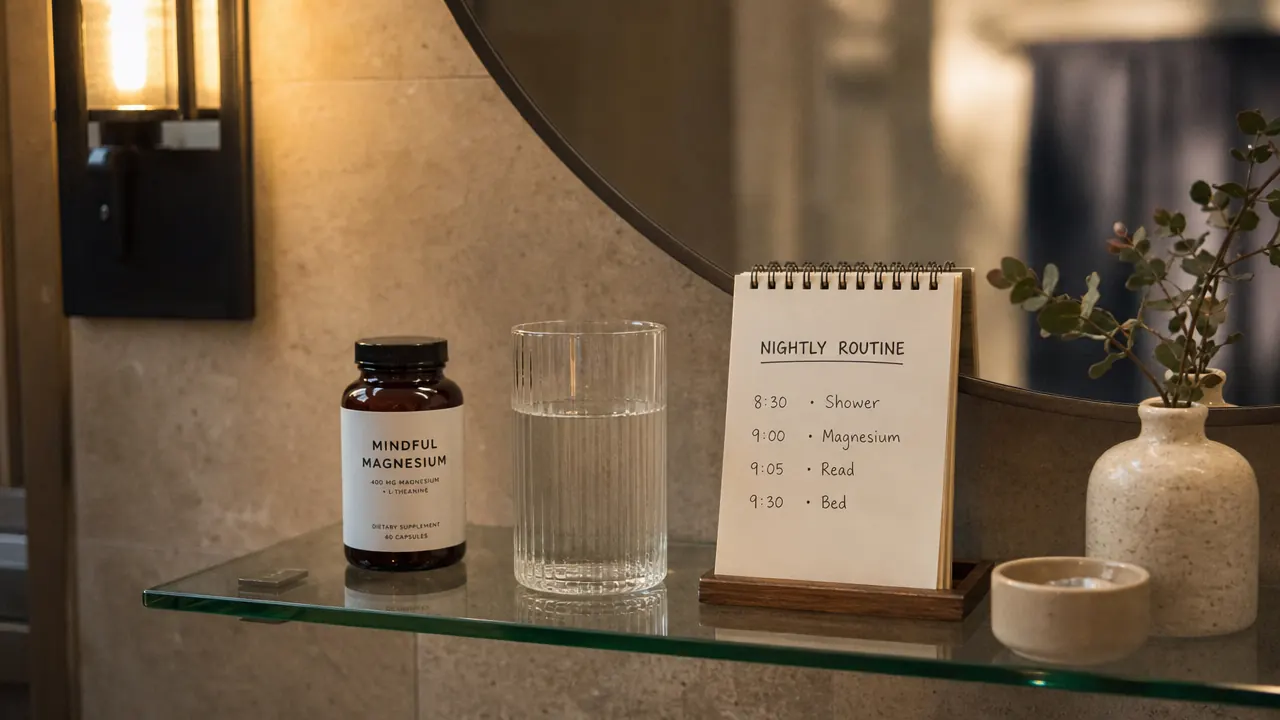
My grandsons wear me out in the best possible way. But for about two years, I would put them to bed and then lie awake staring at my ceiling for an hour, or fall asleep fine and then jolt awake at 2am with a brain that absolutely refused to settle back down. My doctor checked my labs and mentioned my magnesium was on the low side. She said to try a supplement before reaching for anything stronger. That was how I ended up with a bottle of Doctor's Best High Absorption Magnesium Glycinate on my nightstand.
I will be honest: my first week did not impress me much. Then I realized I had been taking it all wrong. Wrong time, probably too low a dose, and without enough water. Once I sorted that out, things started to shift. I want to share what I figured out so you do not spend two weeks wondering why it is not working.
Before we get into the steps, a quick note: this article is for general information only. Magnesium glycinate is a supplement, not a prescription drug, but you should still run it by your doctor or pharmacist, especially if you take any other medications. With that said, here is how to use it so it actually does something.
If your sleep is broken and your doctor says your magnesium is low, this is worth trying
Doctor's Best Magnesium Glycinate has over 75,000 Amazon ratings and a 4.6-star average. Chelated form means better absorption than cheaper magnesium oxide. Check today's price below.
Amazon Check Today's Price on Amazon →Step 1: Start Low and Build Up Slowly
The Doctor's Best Magnesium Glycinate serving size is two tablets, which delivers 200mg of elemental magnesium. Most people starting out do better with one tablet for the first week before going to two. This is not because the supplement is harsh. It is because your digestive system takes a few days to adjust, and jumping straight to the full serving can cause loose stools in some people. Starting with one tablet gave my stomach time to get used to it without any unpleasant surprises.
If you have been low in magnesium for a while, your body is essentially trying to refill a depleted tank. That takes time. You are not going to feel a dramatic difference on day one. What you are doing in week one is laying the groundwork so weeks two and three can actually deliver results. After the first week, I moved to two tablets and that is where I stayed.
One more thing on dosing: do not take more than two tablets without talking to your doctor. The tolerable upper intake level for supplemental magnesium in adults is around 350mg per day from supplements. Two tablets of Doctor's Best puts you at 200mg, which leaves a safe buffer. Do not decide more is better and double the dose on your own.

Step 2: Take It 30 to 60 Minutes Before You Want to Fall Asleep
This is the step I got wrong first. I was swallowing my tablet with my evening meal around 6pm, which is way too early. Magnesium glycinate needs about 30 to 60 minutes to absorb into your bloodstream and start doing its job of calming your nervous system. If you take it at dinner and do not go to bed until 10pm, most of that window has already passed.
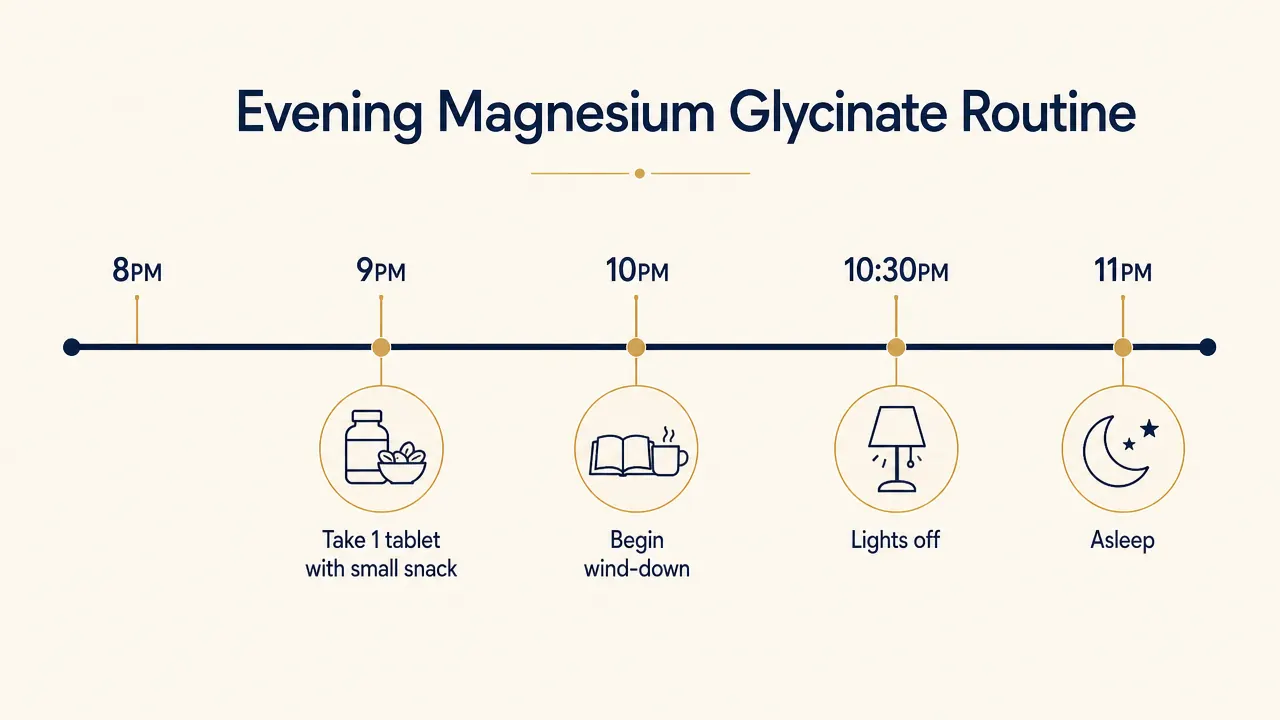
My routine now is to take two tablets at 9pm with a full glass of water, then do a little reading or light television, and be in bed by 9:45 or 10. The timing means the magnesium is working when I actually need it, not hours earlier when I am still doing dishes. If your bedtime is different, count back 45 minutes from when your head hits the pillow and set a phone reminder for that time.
Consistency matters more than perfection here. Taking it at roughly the same time every night trains your body to associate that hour with winding down. After about ten days I noticed I was getting sleepy right around that 9:45 mark without any effort. That felt like a small miracle.
Step 3: Take It With a Full Glass of Water, Not a Sip
Tablets need liquid to break down and absorb properly. A small sip is not enough. I mean a proper 8-ounce glass of water. This also has the bonus of getting some hydration in before bed, which matters more as we get older because we tend to notice thirst less reliably. Just do not drink so much that you are up in the middle of the night for the bathroom. Eight ounces is the right amount.
You can take magnesium glycinate with or without food. Some people do fine taking it on an empty stomach. Others feel slightly queasy without something in their stomach first. I take mine about three or four hours after dinner, which means I am not full but I am also not completely empty. That has worked well for me. If your stomach is sensitive, have a light snack with it for the first few weeks.
After about ten days of taking it at the right time, I was getting genuinely sleepy at 9:45 without any effort. For someone who had been staring at the ceiling for two years, that felt like a real thing.

Step 4: Give It at Least Two Full Weeks Before You Decide If It Works
This is where most people give up too early. Magnesium glycinate is not melatonin. It does not knock you out on night one. What it does is gradually restore magnesium levels that may have been running low for months or years. That restoration process takes time. Most people start noticing a meaningful difference somewhere between day 10 and day 21. A few lucky ones notice it sooner. Some need a full month.
I kept a simple notebook by my bed for the first three weeks. Each morning I wrote down roughly how long it took me to fall asleep and whether I woke up in the night. By day 14 I could see a clear pattern: my time to fall asleep had shortened from about 45 minutes to around 15, and I was only waking once in the night instead of two or three times. That data helped me trust the process during the first week when nothing seemed to be happening yet.
If after a full four weeks you notice absolutely no change at all, that is worth mentioning to your doctor. Some people's sleep problems are rooted in something other than magnesium deficiency, and the supplement will not fix what it is not causing. But give it a fair run before you conclude it does not work.
Step 5: Stack It With Two or Three Simple Sleep Hygiene Habits
Magnesium glycinate works better when your body is already pointed in a restful direction. This does not mean you need a rigid bedtime routine that feels like homework. It means a few small habits that do not fight against what the supplement is trying to do.
The three things I combined with my magnesium: first, I dim the overhead lights in my living room an hour before bed and switch to a lamp. Bright overhead lighting tells your brain it is still daytime. Second, I try not to check my phone for news or social media after I take my tablet. Reading the news at 9pm is a reliable way to make my mind start spinning. Third, I keep my bedroom cool. I turned my thermostat down to 68 degrees at night and noticed I sleep deeper. None of these changes cost anything. Together with the magnesium, they created the right conditions for the supplement to actually do its job.
If your bedroom is bright, loud, or too warm, no supplement is going to fully overcome those physical barriers. Think of the magnesium as the support act, not the whole show. Your sleep environment is the main event.
What Else Helps If You Are Still Struggling
After six months on magnesium glycinate, my sleep is genuinely better than it was two years ago. But I also made a few other changes around the same time that probably helped. I bought a knee pillow because I sleep on my side and my hips were aching at night. I started keeping my room darker with a sleep mask on nights when the street light comes through the curtains. These are small, inexpensive things, but they add up.
If you want to read more about whether magnesium glycinate is the right first step for you versus something like melatonin, I wrote a full comparison in my six-month review of Doctor's Best Magnesium Glycinate and in the 10 reasons magnesium glycinate helps you sleep piece. Those go deeper into the how and why behind it.
The short version of what else helps: consistent wake-up time (even on weekends), no caffeine after noon, and getting some daylight in the morning. Those three things help regulate your body clock so the magnesium has a stable rhythm to work with instead of a chaotic one.
Ready to give magnesium glycinate a proper two-week try?
Doctor's Best High Absorption Magnesium Glycinate is one of the most-reviewed sleep supplements on Amazon. The chelated form absorbs better than magnesium oxide found in cheap alternatives. Check today's price and current availability.
Amazon Check Today's Price on Amazon →